Column · No.05 · Sizing
Press-On Nail 1mm Too Big or Too Small? Filing fixes big; small can't be fixed — here's why
A press-on tip that runs 1mm big can be filed to fit in minutes; one that runs small cannot be fixed at all. The 3-step filing method, how much you can safely remove, and what to do if it’s too small.
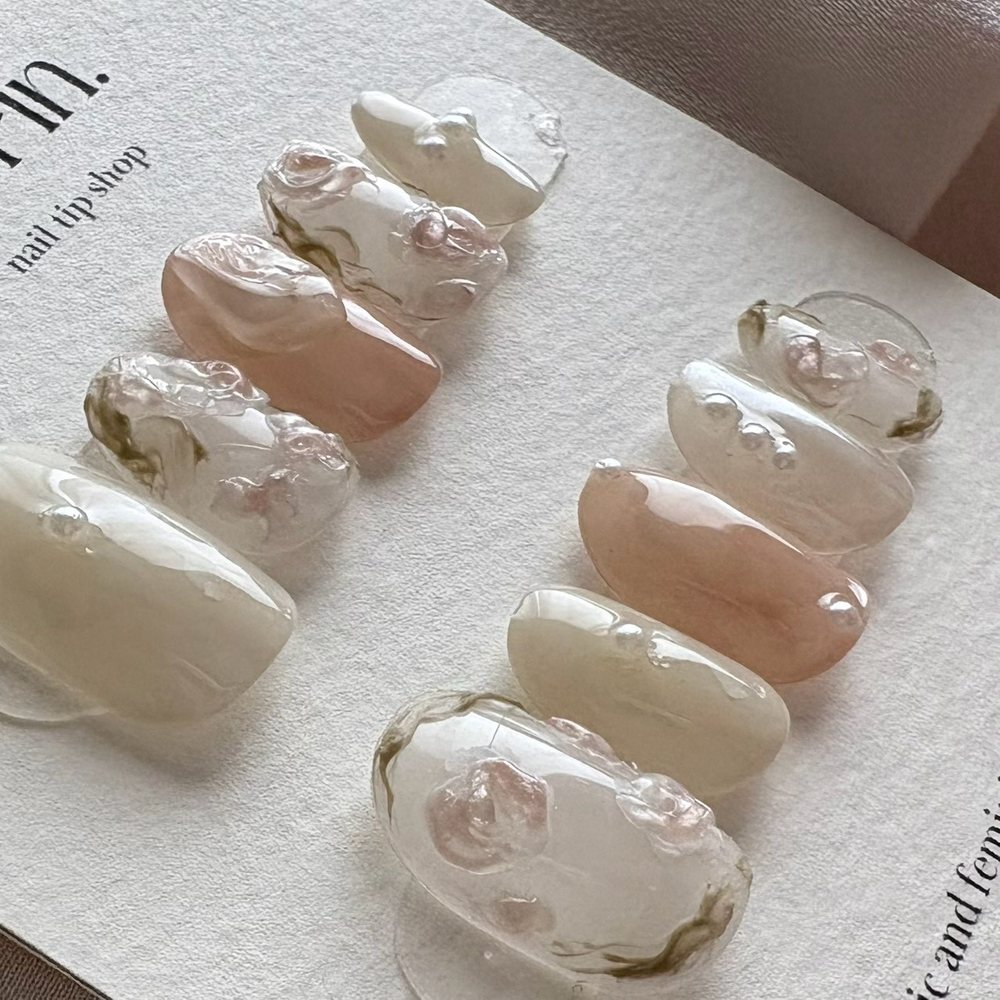
Your set arrived and it is close, but not quite right — maybe 1mm too big, maybe 1mm too small. The short version: too big can be fixed with a nail file in a few minutes; too small cannot be fixed at all. That asymmetry is also exactly why we always tell people to round up when a measurement falls between two sizes.
The conclusion, first
| Situation | Fixable? | What to do |
|---|---|---|
| 0.5–1 mm too big | Yes | File both edges down |
| More than 1 mm too big | Partially | File up to 0.5mm per side; beyond that, order a size smaller next time |
| Any amount too small | No | Order a size larger next time — see below for using it as-is in the meantime |
A handmade tip can be made smaller by filing, but it cannot be made larger — which is the entire reason “round up when unsure” is the safer default every time.
Telling “too big” from “too small”
Hold the tip against the nail before applying anything and look closely at both sides.
| What you see | Meaning |
|---|---|
| Both edges rest on the skin beside the nail; pressing whitens the skin, or the middle lifts | Too big |
| The tip's edge lines up exactly with the nail's edge; nothing lifts when pressed | Correct fit |
| A sliver of natural nail is visible beside the tip; edges tend to peel once applied | Too small |
Filing an oversized tip — 3 steps
- Identify which side (or both) overhangs before you start filing.
- File in one direction only, base to tip, using a 180–240 grit file and aiming for about 0.5mm per side.
- Recheck against the nail and stop once the skin is no longer compressed at the edge.
How much you can safely remove
| Guideline | Detail |
|---|---|
| Maximum per side | 0.5mm (1mm total across both edges) |
| Per pass | Remove 0.2–0.3mm at a time, checking fit between passes |
| Where to file | A straight, even line from base to tip |
| Where not to file | The very tip (that changes length, not width) or the underside (reduces the adhesive surface) |
The trick is to stop while it still feels very slightly loose rather than filing until it feels perfect — a hair too loose settles in once applied, while a hair too tight has already gone too far.
If it is too small instead
Two honest options, since filing cannot help here:
- Note the correct number for that finger and order one size up next time.
- Wear it as-is if the fit is close enough to be usable — nail glue instead of the adhesive tabs holds a slightly tight tip more securely at the edges.
Because every set is made to the exact ten numbers you provide, a too-small result usually means one number was measured optimistically rather than rounded up — see our full sizing guide for the paper-tape method that avoids this.
Quick answers
A tip arrived 1mm too big — what do I do?
File both edges down, working from base to tip in one direction, removing about 0.5mm per side. Check the fit against your nail as you go, and file before you apply it, not after.
What if it's too small instead?
There's no way to enlarge a finished tip. Note the correct number for that finger and order a size up next time; in the meantime, nail glue holds a slightly tight tip more securely than adhesive tabs.
How much can I safely file off?
About 0.5mm per side, 1mm total. Beyond that the tip's curve starts to distort, and you're better off ordering a size down for that finger next time.
Why do you recommend rounding up when a measurement is in between?
Because a tip that runs slightly big can always be filed to fit, while one that runs slightly small can't be fixed at all — rounding up is the safer direction every time.
Read next
ColumnHow to Measure Your Press-On Nail Size→Column
Left and Right Hands Are Different Sizes→
More from écrin